 Singapore







Psychometric assessments in recruitment: A guide for Singapore employers
Summary
Psychometric assessments help Singapore employers gain deeper insights into candidates’ abilities, behaviors and suitability for specific roles. When used alongside interviews and other selection methods, they can improve hiring consistency, strengthen role fit and support more informed recruitment decisions.
Introduction
Singapore’s evolving workforce is creating new demands for employers to identify candidates who can adapt to change, learn quickly and perform effectively in dynamic work environments. As a result, hiring decisions increasingly need to consider more than qualifications, experience and technical skills.
Psychometric assessments provide a structured approach to understanding how candidates think, respond to workplace situations and approach different tasks.
When used alongside interviews and other selection methods, they give Singapore employers a broader understanding of candidate suitability and support more informed, consistent and effective hiring decisions.
What is a psychometric assessment?
A psychometric assessment is a structured method used to measure a candidate's mental capabilities, working styles, and behavioral traits. Going beyond traditional resumes, these evaluations provide hiring managers with objective insights into how a person thinks, solves problems, and collaborates.
They generally combine cognitive aptitude tests, which evaluate logical reasoning, with personality profiling to better assess workplace preferences. By replacing subjective first impressions with reliable data, these tests help Singapore organizations make confident, well-rounded hiring decisions.
Understanding the different types of psychometric assessments
Psychometric assessments can evaluate a range of qualities, from reasoning and problem-solving to personality and behavioral preferences. Each type offers different insights that can support more informed hiring decisions.
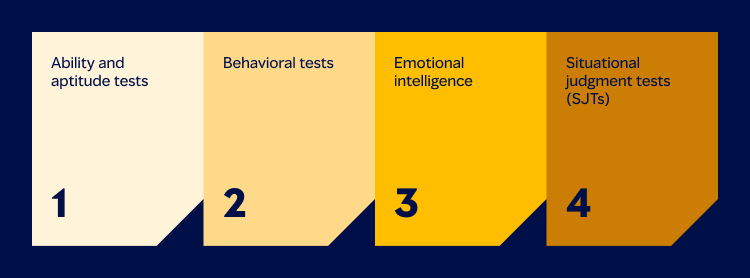
Ability and aptitude tests
Designed to measure specific cognitive capabilities. These evaluations cover areas such as numerical reasoning, verbal comprehension, logical deduction, and spatial awareness to determine a candidate's potential for acquiring job-related skills.
Behavioral tests
Focused on analyzing observable actions, workplace habits, and reactions under specific conditions. Behavioral tests help predict how an individual will perform, collaborate, and adapt within a team environment.
Emotional intelligence
Aimed at gauging an individual's capacity to recognize, understand, and manage their own emotions. They also measure the ability to perceive and influence the emotions of others, which remains vital for leadership and collaboration.
Situational judgment tests (SJTs)
Built around scenario-based evaluations that present candidates with realistic workplace dilemmas. These assessments measure problem-solving abilities, decision-making competency, and alignment with organizational values.
How Singapore employers can improve hiring with psychometric assessments
Psychometric assessments give Singapore employers objective, structured insights into candidates’ capabilities, behaviors and suitability for specific roles.
When combined with interviews and other selection methods, they can support more informed, consistent and effective hiring decisions.
Increase objectivity
Psychometric assessments provide standardized measures of candidates’ abilities and behavioral traits, helping Singapore employers reduce subjective judgments and make more consistent hiring decisions.
Improve role matching
These assessments help employers evaluate whether candidates’ cognitive abilities, personality traits and behavioral characteristics align with the specific demands of each position.
Identify hidden potential
Psychometric assessments can reveal strengths such as problem-solving, adaptability and learning ability that may not be evident from resumes or interviews alone.
Support structured interviews
Psychometric assessment results provide interviewers with evidence-based insights, enabling them to ask more targeted questions and explore relevant competencies in greater depth.
Reduce hiring risks
By providing additional evidence about candidate suitability, these assessments can help employers identify potential mismatches and reduce the likelihood of costly unsuitable hires.
Strengthen workforce planning
Assessment insights can help employers understand candidates’ capabilities and development needs, supporting better placement decisions and contributing to longer-term workforce effectiveness.
Complement existing methods
Psychometric assessments are most effective when combined with interviews, qualifications, experience and other job-relevant evidence, creating a more comprehensive basis for hiring decisions.
Applying psychometric assessments across different job functions
Psychometric assessments can be adapted to different roles, helping Singapore employers assess the skills and behaviors most important for each position.
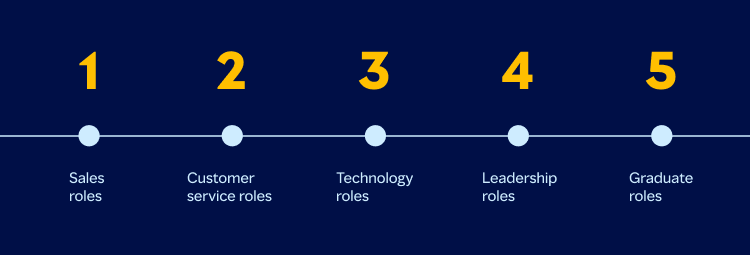
Sales roles
Measure communication, persuasion, confidence and resilience to identify candidates suited to target-driven environments.
Customer service roles
Evaluate empathy, patience, communication and emotional stability to identify candidates who can handle customer interactions effectively.
Technology roles
Identify logical thinking, problem-solving, adaptability and learning ability for technical and fast-changing roles.
Leadership roles
Gauge decision-making, strategic thinking, communication and leadership capabilities for managing teams and achieving business goals.
Graduate roles
Identify learning ability, adaptability, problem-solving and interpersonal skills among candidates with limited work experience.
Integrating psychometric assessments into the hiring workflow
Psychometric assessments add value when they are carefully selected, consistently administered and interpreted alongside other hiring information.
Step 1: Define the role requirements
Identify the key skills, abilities and behavioral traits needed for successful performance in the role.
Step 2: Choose the right assessment
Select a reliable, validated psychometric assessment that aligns with the identified requirements.
Step 3: Set assessment criteria
Establish clear benchmarks for interpreting results and ensure they are applied consistently across candidates.
Step 4: Introduce the assessment
Inform candidates about the assessment, its purpose and how it fits into the overall hiring process.
Step 5: Administer consistently
Provide all candidates with the same assessment conditions and instructions to maintain justness.
Step 6: Review the results
Analyze assessment outcomes alongside candidates’ qualifications, experience, interviews and other selection information.
Step 7: Conduct structured interviews
Use assessment insights to guide relevant interview questions and explore specific strengths or development areas.
Step 8: Make the hiring decision
Combine assessment findings with other evidence to determine overall suitability for the role.
Measuring the effectiveness of psychometric assessments
Employers should regularly evaluate whether psychometric assessments are delivering better hiring outcomes and supporting long-term workforce performance.
Track hiring quality
Compare assessment results with new hires’ job performance and productivity to determine whether assessments identify suitable candidates.
Monitor retention
Review employee retention and turnover rates to understand whether assessments are helping employers make better long-term hiring decisions.
Measure time-to-hire
Evaluate whether assessments help recruiters screen candidates more efficiently without compromising the quality of selection.
Review candidate feedback
Gather feedback on the assessment experience to identify opportunities to improve the overall candidate engagement.
Compare assessment outcomes
Analyze assessment results against interview performance, job performance and other selection data to identify meaningful patterns.
Evaluate role fit
Review whether employees selected through assessments demonstrate the skills and behaviors expected for their roles.
Refine the process
Use hiring data and feedback to regularly review assessment methods and improve their effectiveness over time.
Conclusion
For Singapore employers, effective hiring is about finding candidates who can meet the demands of a role and contribute to the organization over the long term. Psychometric assessments can strengthen this process when used alongside interviews, experience and other selection methods. From improving role fit to supporting more consistent evaluations, they can help employers make decisions with greater confidence. The key is to use them as part of a structured hiring strategy rather than as a standalone measure. With the right approach, organizations can make better-informed hiring decisions while building teams that are well-suited to their roles and future business needs.
FAQs
Are psychometric assessments useful for graduate hiring in Singapore?
How can Singapore employers choose the right psychometric assessment?
How can psychometric assessments improve candidate-role fit in Singapore?


Get awesome marketing content related to Hiring & L&D in your inbox each week
Stay up-to-date with the latest marketing, sales, and service tips and news
By using our offerings and services, you are agreeing to the Terms of Services and License Agreement and understand that your use and access will be subject to the terms and conditions and Privacy Notice