 English







How talent intelligence is powering the next era of HR strategy
Decoding the buzz around talent intelligence
As organizations navigate rapid workplace changes, HR leaders are increasingly seeking structured and forward-looking ways to anticipate the evolving needs of the workforce. Traditional reactive approaches often leave major gaps in talent planning. To tackle this, HR leaders are turning to talent intelligence. It helps organizations detect gaps in talent planning early and provides the strategic foresight needed to fill those gaps before they become significant.
From data to decisions: Defining talent intelligence
Today's HR teams sit on a growing wealth of data. Resumes, performance reviews, skills inventories; the information keeps growing. The real challenge isn't collecting it. It's connecting the pieces. When organizations link workforce insights with shifting market conditions, workforce strategy sharpens and accelerates. Teams can zero in on what drives results instead of getting lost in spreadsheets.
Talent intelligence helps organizations make sense of it all. It draws together employee performance, skill levels, exit interview findings, competitor hiring patterns, and signals from social channels. When HR examines these diverse sources, patterns emerge. Organizations spot employees ready for advancement. They identify skill gaps before problems develop. And they anticipate where the market moves next. The combination of strong tools, rigorous data analysis, and human judgment gives managers genuine visibility into their workforce, revealing both the potential and the challenges ahead.
The real value of talent intelligence for modern organizations
Talent intelligence transforms how organizations approach their workforce. It moves beyond simply tracking who works where and what they earn. Instead, it creates a fuller picture of capability, potential, and risk across the entire organization. The ability to see patterns where talent thrives, where gaps emerge, and where people are likely to leave gives leadership the foundation for smarter workforce choices.
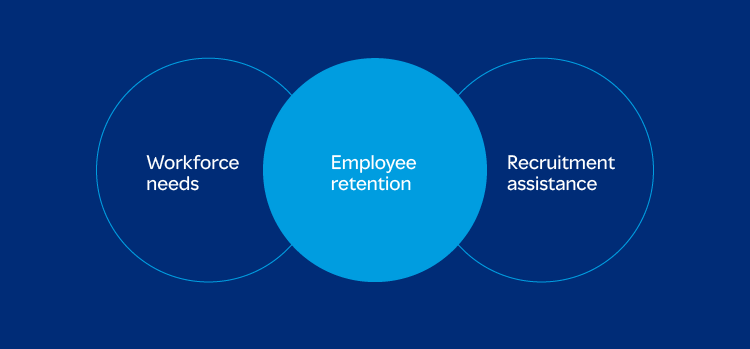
Anticipating workforce needs
Organizations that leverage talent intelligence don't wait for skill shortages to become problems. They identify gaps while there's still time to build capacity. This forward-looking approach means teams can hire, train, and develop talent on their own schedule rather than scrambling to fill unexpected vacancies.
Building employee retention
When employees are employed in positions that align with their skills and interests, retention rates rise. Talent intelligence reveals patterns about who stays engaged and who might be looking elsewhere. With this clarity, organizations can address concerns before someone decides to leave.
Aligning recruitment with business direction
Hiring takes on a different purpose when it connects to where the organization is headed. Instead of filling immediate vacancies, recruitment becomes part of a larger plan. Organizations develop talent in roles where future growth is anticipated, creating depth in the areas that will matter the most.
How leading companies can use talent intelligence to stay ahead
Leading organizations can attain impressive outcomes with talent intelligence initiatives. For instance, a telecommunications company could identify skill clusters and connect the findings to shape its reskilling strategy. The HR team might then prepare employees for roles in emerging technology, driving a smooth transition and continued growth.
Similarly, a healthcare company can analyze workforce data to anticipate areas at risk of high turnover and respond with focused development plans that stabilize key teams. Manufacturers and financial services firms can recognize technical and compliance risks with the talent intelligence tools, uncovering talent that once remained unnoticed.
Each company experiences a unique journey, but can gain numerous benefits from talent intelligence with faster recruitment, more accurate hires, and workforce planning that supports long-term growth. The impact grows significantly when organizations tie their efforts to measurable outcomes. This approach rests on evidence and predictive modeling, moving decisions from guesswork to data-driven confidence.
The tech backbone: AI, analytics, and platforms driving the shift
Technology forms the backbone of any successful talent intelligence strategy. Sophisticated platforms pull together information from internal systems, external labor markets, learning platforms, and more.
HR teams gain access to real-time dashboards, customized reports, and actionable recommendations that guide their next steps. Companies identify suitable candidates, forecast future skill demands, and reduce risks within the organization with predictive models.

Technology empowers HR professionals to move from data collectors to decision-makers, putting intelligence at the centre of every process.
Internal talent marketplaces have also gained wider acceptance. These platforms connect employees to new roles and projects inside the organization, allowing faster redeployment and reducing reliance on external hires.
Practical implementation: The pathway to results
Successful talent intelligence is not an overnight success. Pilots and phase deployments are especially beneficial for organizations. Initial activities include the import of current skill taxonomies, identification of business unit champions, and the validation of governance protocols such as privacy and discrimination safeguards. Integration with systems, configuration of dashboards, and training of managers are subsequent steps that follow. Those investing in AI literacy report more successful talent intelligence adoption, especially when teams learn to evaluate skills rather than relying only on past roles.
Managers who understand how data fuels skills mapping feel equipped to assign projects more effectively. Success is ensured through internal communication and transparency of the deployment at all touchpoints, including campaigns that communicate career growth opportunities.
Future outlook: Building an HR strategy that learns, adapts, and leads
The future of talent intelligence is all about adaptability. In other words, successful HR teams will view workforce planning as a fluid, ongoing process that evolves with every new data point. Integration with business functions will go deeper, supporting initiatives beyond recruitment and retention.
Continuous learning will also transform into a shared priority, and talent intelligence highlights where upskilling, reskilling, or new growth opportunities could benefit entire departments. Workplace culture will advance as intelligence tools begin to identify inclusion trends and guide transparent communication practices. Leaders will also prioritize data literacy to make HR decisions that are ethical and strategically sound. Attention to ethical implementation will grow as data-driven methods become standard. Companies will start establishing rules for privacy and impartiality, especially as automation touches every stage of workforce planning. Strategic leaders have already invested in governance protocols that protect employee information to make sure predictive analytics and skill mapping align with organizational values. Hence, employees benefit from open dialogue on technology, growth, and transparency.
Conclusion
Talent intelligence remains a strategic need in modern human resource management. Such combinations of technology, data, and human insight provide an opportunity for organizations to transition from reactive responses to proactive strategies and create environments that allow innovation and growth to take root. Enterprises that fully commit to skills-based talent management, deploy technology with thoughtful consideration, and invest in continuous learning create valuable futures for both employees and the business. The workforce becomes more engaged, leadership pipelines strengthen, and organizations remain prepared for whatever comes next.
FAQs
How does talent intelligence differ from people analytics?
What are the benefits of implementing talent intelligence?
Are there risks or challenges with talent intelligence?





Get awesome marketing content related to Hiring & L&D in your inbox each week
Stay up-to-date with the latest marketing, sales, and service tips and news
By using our offerings and services, you are agreeing to the Terms of Services and License Agreement and understand that your use and access will be subject to the terms and conditions and Privacy Notice