

360-degree feedback gives leaders a fuller picture than single-source reviews. This article provides a concise roadmap to design the process, protect confidentiality, and convert insights into measurable learning and succession outcomes.
Building a healthy workplace culture requires shared accountability, where feedback is not owned by one person or one level. 360-degree feedback supports this by creating a space where open, honest insights from all levels become the norm.
This type of feedback breaks down walls between teams, builds deeper trust, and shows employees that the company is truly invested in their future.
360-degree feedback is a structured performance review process that gathers reviews about an individual from multiple sources. This includes managers, peers, direct reports, and often external stakeholders such as clients or vendors, alongside the individual’s own self-assessment. This multi-perspective approach creates a more complete and balanced picture of strengths, development areas, and recurring behavioral patterns that single-source reviews (for example, only a manager’s view) can miss.
By combining quantitative ratings with qualitative comments, it surfaces both what someone does well and how their actions are perceived, giving clear direction for focused development and better-informed coaching conversations.
Many organizations adopt 360-degree feedback because it delivers more actionable insights than single-source performance reviews. When used thoughtfully, it supports development, improves decision-making, and strengthens culture by making feedback regular, balanced, and tied to behaviors that matter.
It compares self-perception with others’ observations. This contrast helps individuals see where their intentions and impact diverge, enabling targeted personal growth.
Identifies behavioral patterns critical for moving into or succeeding in leadership roles. By highlighting strengths and recurring gaps, it steers coaching and experiences that build leadership capacity.
Pinpoints specific skills and behaviors to prioritize in coaching and training. That precision makes development investments more efficient and increases the likelihood of measurable improvement. Organizations can use Mercer’s 360-degree feedback tool to generate insight-rich reports that pinpoint perception gaps across critical competencies.
Normalizes ongoing, multi-source feedback and reduces feedback anxiety. Regular exposure to balanced input shifts feedback from a one-off event to a habit that fuels continuous improvement.
Surfaces team dynamics and interpersonal issues that affect collaboration. With clearer visibility into how team members interact, leaders can address friction, optimize roles, and boost collective effectiveness.
Measures how well actions reflect organizational competencies and culture. This alignment ensures development work supports broader business goals, not just individual preferences.
Provides richer data to assess readiness and developmental needs for critical roles. Comparing multi-rater feedback across candidates highlights who’s prepared and where gaps must be closed before promotion.
When tied to development, it demonstrates investment in individual growth. Employees who see real follow-through on feedback feel valued and are more likely to stay and contribute.
Supplements quantitative metrics with qualitative behavioral insight for better decision-making. Combining ratings and narrative examples gives leaders a fuller basis for promotions, role changes, and development priorities.
Implementing a 360-degree feedback process turns multi-source input into clear, development-focused action. When planned and executed thoughtfully, it accelerates behavior change, strengthens leadership capability, and embeds continuous learning into everyday work.
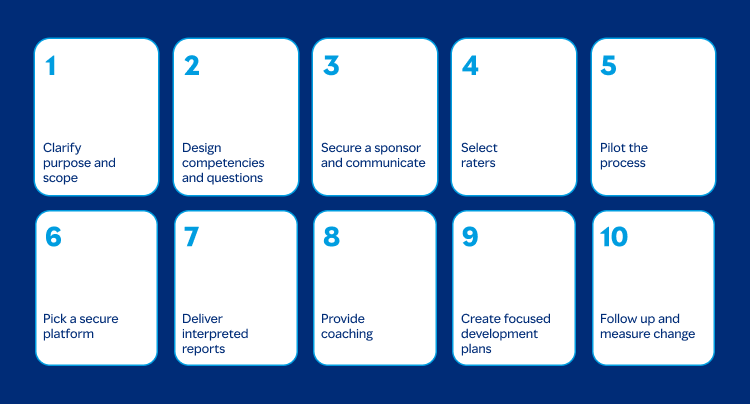
Even well-intentioned 360 programs can stall or backfire when design, communication, or follow-through are weak. The short list below highlights frequent pitfalls and practical fixes organizations can apply immediately to protect trust and ensure the process drives real development.
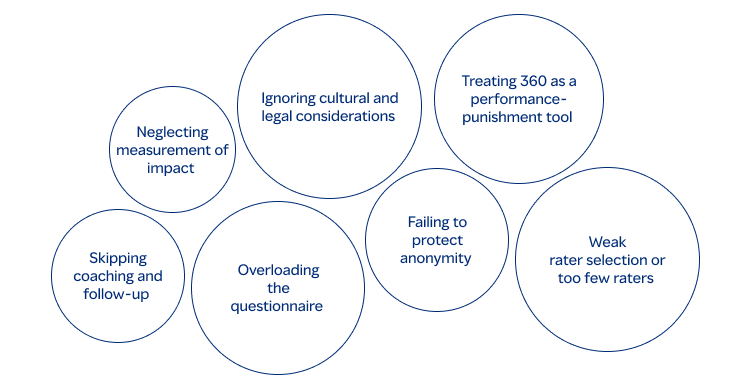
Fix: Clearly declare development-first intent and separate 360 outputs from compensation decisions.
Why it helps: When participants know feedback won’t be used punitively, they give more honest, constructive input.
Fix: Keep it focused (6–10 competencies) and prioritize comment fields for examples, not long surveys.
Why it helps: Short, targeted surveys increase completion rates and produce higher-quality, actionable responses.
Fix: Aim for balanced 6–12 raters across groups and validate nominations to avoid bias or collusion.
Why it helps: A diverse, validated rater set produces reliable patterns rather than outlier opinions.
Fix: Use aggregation thresholds and a secure platform; communicate anonymity rules clearly to build trust.
Why it helps: Clear safeguards encourage candor and protect relationships while maintaining data integrity.
Fix: Pair feedback with a coach/manager and schedule checkpoints to turn insights into measurable progress.
Why it helps: Ongoing support ensures momentum, accountability, and real behavior change over time.
Fix: Review local privacy laws, adapt communications for cultural norms, and get legal/HR sign-off.
Why it helps: Compliance and cultural sensitivity reduce risk and improve participation across regions.
Fix: Track participation, development-plan completion, and behavior change via follow-up surveys or manager observations.
Why it helps: Measuring outcomes proves ROI and highlights where the process needs adjustment.
Investing in a robust 360-degree feedback framework is ultimately an investment in talent retention and organizational capability. High performers rarely leave companies that actively support their professional trajectory and provide clear, multi-angled insights for advancement. By replacing outdated review habits with a comprehensive evaluation system, organizations optimize training investments and maximize employee potential. The ultimate reward is a resilient, highly engaged workforce equipped to meet changing industry demands.
Originally published July 20 2026, Updated July 23 2026

Varsha specializes in tech and SaaS storytelling, crafting clear, high-impact blogs, social media content, ad copy, and thought leadership content. She brings structure, clarity, and a sharp brand voice to every piece. Outside work, she enjoys painting, sketching, and reading novels.
360-degree feedback is a holistic performance review mechanism. It collects feedback about an employee from multiple sources - managers, peers, and subordinates - for appraisals and organizational planning. 360-degree feedback empowers organizations to make better people decisions.


Thanks for submitting the comment. We’ll post the comment once its verified.





 Behavioral Competencies
 Cognitive Competencies
 Coding Competencies
 Domain Competencies

















Would you like to comment?